
Transcript
Announcer:
You’re listening to GLC on ReachMD. This activity, titled ‘Elevating Adult SMA Care: Applying Real-World Evidence Through Case-Based Insights,’ is provided by Global Learning Collaborative.
Prior to beginning the activity, please be sure to review the faculty and commercial support disclosure statements, as well as the learning objectives.
Dr. Gable:
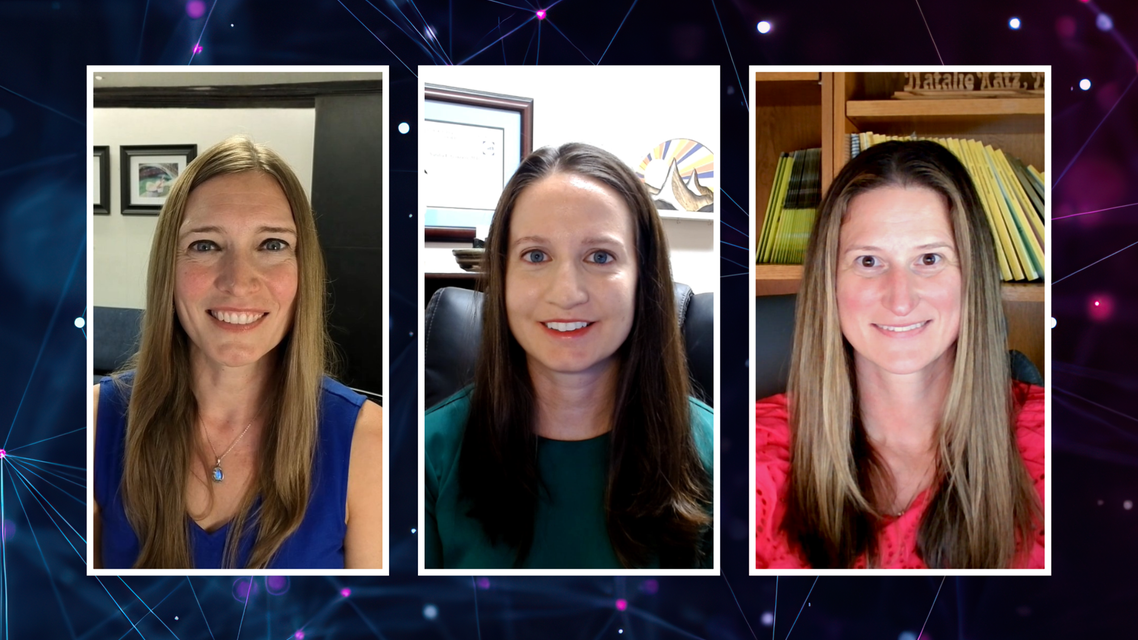
As more individuals with spinal muscular atrophy are living well into adulthood, and as disease-modifying therapies continue to reshape expectations, the adult SMA landscape has become increasingly complex. Many adults have experienced fragmented follow-up, inconsistent monitoring, or gaps in SMA-focused care after transition. In this segment, we'll discuss how to reintegrate adults after a period without consistent clinical treatment, rebuild a practical baseline, and determine whether new concerns reflect progression, fatigue, deconditioning, psychosocial factors, or unmet supportive care needs. We'll also look more broadly at how adult-relevant outcomes and patient-reported tools can guide long-term treatment planning, shared decision-making, independence, and participation. I'm Dr. Karissa Gable, and this is CE with GLC.
Dr. Gonzalez:
And I'm Dr. Natalia Gonzalez.
Dr. Katz:
And I'm Dr. Natalie Katz.
Dr. Gable:
So first, we'll get into the disease-modifying therapies. So, Dr. Gonzalez, if you want give us an overview of what disease-modifying therapies are available for the adult with SMA.
Dr. Gonzalez:
Sure. So, just a review: SMA is spinal muscular atrophy, and it's an autosomal recessive disease. It's caused by either deletions or mutations of the SMN1 gene on both alleles, and so this causes insufficient survival of motor neuron protein, and consequently, degeneration of the motor neurons. There is an SMN2 gene that produces mostly truncated protein, and the copy number of the SMN2 gene correlates inversely with disease severity, so the higher the number of SMN2 gene copies, the lower the disease severity.
Just a decade ago, there were no treatment options, and the disease was devastating and life limiting for many infants. But now we have 5 FDA-approved therapies— disease-modifying therapies—in the United States. So there's three broad categories. The first are treatments that target that backup SMN2 gene to increase the production of functional SMN protein, the second are gene replacement therapies, and then the third we have a new myostatin inhibitor.
So first approved in 2016 was nusinersen, and that is an antisense oligonucleotide, and it is administered intrathecally every 4 months, and it promotes increased production of that functional SMN from the SMN2 gene. And then similar in mechanism of action is risdiplam, and that's a small molecule SMN2 splicing modifier. So it promotes increased production of the functional SMN, and that is administered orally and daily, and it is tablet or liquid form.
In addition to that, there are SMN1 gene replacement therapies. There are two approved therapies via an AAV9 viral vector, and this is onasemnogene. So there's a one-time IV infusion that's approved for patients under the age of 2, and then there's a one-time intrathecal injection that's approved for patients 2 years or older.
And then finally, as of the time of this recording, there's a new myostatin inhibitor that's approved, apitegromab, and it is a myostatin activation inhibitor. So myostatin inhibits muscle growth, so this inhibits myostatin activation, and it's approved for patients 2 years and older that are already receiving an SMN2-targeted therapy. And this is an IV infusion that's administered every 4 weeks.
Dr. Gable:
That's a great overview of the current therapies. It's really amazing that we have these to offer, and I think, Dr. Katz, if you want to give a little more information about monitoring requirements for some of these and resources to find details and prerequisites for treatment with gene therapy, like the antibody testing that's required, that'd be great.
Dr. Katz:
Yeah, it really is remarkable that so many new therapies are available, even just over the last decade. Many of it started in infants, but now, as we know, all of these are being approved for the adult space as well, which is really amazing.
All of them come with different risks and benefits and monitoring requirements. There's a lot of information that's available on advocacy organization websites. All of these companies have websites that go into details about these treatment options, and then through talking with your providers, you can discuss more about what the prerequisites and testing and treatment options would look like.
Gene therapy or onasemnogene has probably the most requirements for testing, with the biggest one being needing to make sure that you don't have antibodies to the AAV viral capsid or the little package that helps deliver the genetic information. So, if you have that, then you won't be able to receive the therapy and have it be effective. The antibodies aren't as important for the other treatments that are out there, but other things can be monitored both pre- and post-dosing for some of the other treatment options.
Dr. Gable:
Yeah, I think that's a good overview. I think the gene therapy is an amazing option too that's now just available, and the new therapy that just became FDA approved. For nusinersen, we were giving that for a while now, and we still monitor for renal toxicity and I was reading in infants; it can have hyponatremia sometimes with that one as well, and the coagulopathy that can happen. So we usually get those labs before we dose that one.
Risdiplam requires less monitoring labs, so that's kind of a benefit in a way for patients not to have to go through a lot of monitoring for that. And then yeah, and looking through the gene therapy monitoring, there's a lot of pre- and post-monitoring, like you were saying, like just with frequent liver function test abnormalities and a CBC with platelet function and monitoring that almost weekly for quite some time for the first couple months and then the liver function tests. So at least the first 3 months there's very close monitoring but you can kind of look at the website and the label to kind of get a good idea. But I think that's something to keep in mind when you're considering that for treatment.
And then we don't know about the new one, it’s just out now. So it's an IV infusion monthly, and then I think there's variable doses. It takes a couple hours, so we'll see how that goes as that starts to get up and running and monitoring for that.
So I think moving on to how should clinicians interpret change versus stability in an adult with SMA, and so that correlates too to also what do we do with treatments, and we'll talk about a case and how to determine if the treatment change should happen or not based on how the symptoms are going. And so I guess what do you all think should count as a meaningful treatment outcome, and for measurement? So Dr. Katz is a pediatric neurologist, and Dr. Gonzalez and I are both adult neuromuscular neurologists, but we share patients back and forth, and we all have experience with this disease, and so this is an important thing to cover for what counts as meaningful treatment outcomes. So I think Dr. Gonzalez, if you want to go first and talk about that a little bit.
Dr. Gonzalez:
Yeah. So there is a big difference between how do we define clinical stability and meaningful outcomes in children versus adults. So, in children, they're still growing and developing. So, the normal motor milestones that we expect are progressive gains over time. So, head control and then crawling and sitting and standing and walking. And after infants are treated, we're looking for continued milestone achievement.
But many adults at least at this time, have already lived long lives before treatments were available, and so they've already had a lot of motor neuron loss that's already occurred. So they have more weakness and contractures already. So the focus becomes more on preserving abilities rather than developing new milestones. For example, we want to preserve the ability for a patient to feed themselves, or use their wheelchair controls, or transfer, or use a computer for work or communication, to be able to attend school, to have improved fatigue, to be able to swallow well, and respiratory function is something else that we look at closely.
So it's important that the outcomes are individualized based on the patient's current abilities and their goals. So there are outcome measures and motor scales that have been used in clinical trials, and we do use those in clinic in times as well. But they don't necessarily provide useful information for every patient and for all of their goals, and this is particularly true in adults. For example, the Hammersmith Functional Motor Scale, even the revised version, does have a floor effect in patients with severe weakness, so it's not as helpful in adult patients who typically do have severe weakness. There are other measures like the Revised Upper Limb Module that might be better in measuring some important arm and hand function. But again, it doesn't necessarily capture all the aspects of hand dexterity that's individual to each patient.
Dr. Gable:
It's a great summary. Dr. Katz, what do you have to add from your perspective?
Dr. Katz:
Yeah, I think Dr. Gonzalez summed it up very nicely. It varies from patient to patient, and it varies from clinic to clinic. I think as a pediatric neurologist, and thinking about what I hope to accomplish for my patients is really just doing everything I can to set them up for as much success as possible as they think about going into adulthood. And with all of these new therapies available to them, it really changes their options and what their future looks like.
And so, really, what we try and do with all of these assessments is say: Are you still gaining in motor milestones? Are we seeing a change in your level of function that maybe we need to investigate a little bit further? And then how is this impacting you on a day-to-day quality of life level? And those are some of the things that are really hard to measure in those standardized assessments. And so, from a combination of what is day-to-day life like for you? How are you doing? Plus, some of the assessments that we use, we can see if you're doing well or if we need to help support you in other ways, so that we can set you up for success as you think about next steps beyond childhood and into adulthood.
Dr. Gable:
Yeah, absolutely. I think I agree that oftentimes it ends up being a lengthy conversation and it takes time to really get to the bottom of what the day-to-day life is for a patient so you can really understand what the functional meanings of like small functional gains mean and what small functional declines could mean for adult patients. And so I think stability is a really important measure. I think taking the time to do a thorough neurologic exam actually goes a long way in addition to the outcome measures that we use, that Dr. Gonzalez was mentioning as well. So I think it's really a combination of things, and just kind of really paying close attention to your patient.
Fatigue is a very difficult thing to assess, and we'll talk a little bit about that too in one of the later cases. But I think that you often want to make sure that you're understanding where the fatigue is coming from. It can be very fatiguing to be weak and to try to do things and tax your muscles. But there can also be other contributing causes to fatigue as well that need to be further explored, like maybe a vitamin D deficiency or something more kind of basic. Internal medicine really is what you need to think about too, because just to make sure that they have every basis covered for having the most energy as possible, or even discussing that with a therapist so that they can talk about conserving measures for conserving energy too in their day-to-day function.
So I think with that section we will close, and then we'll get into a case.
So for case 1, this is a 28-year-old male with SMA who is followed regularly by a pediatric neuromuscular team through adolescence. And after transitioning to adult care, Jordan became lost to SMA specialty follow-up and has had several years without consistent monitoring. So he now reenters care, reporting day-to-day changes, including increased fatigue, more difficulty with transfers, reduced participation in work and social activities, a greater concern about maintaining independence. So, I think the question here is: When an adult with SMA reenters care after a period of being lost to follow-up, how do you reconstruct a clinically useful baseline? I think Dr. Gonzalez, if you want to take that first.
Dr. Gonzalez:
Yeah, so it can be pretty difficult when someone hasn't been seen regularly in clinic to determine what an increase in symptom represents. So this is particularly true if they are a pediatric patient who's now establishing care with a new provider in the adult clinic.
First, there may be disease progression, particularly if they're not on treatment. Second, there's been a lapse in supportive care by a multidisciplinary team, so lost opportunities for physical therapy, management of contractures, identifying and managing respiratory needs, modification of assistive devices. So that's an important factor of care for patients with SMA, and certainly people can notice loss of function if that is not continued. And third, the patients' day-to-day activities may have changed as they entered adulthood. So some of them become more isolated because they finish school; they don't have those resources that are attached to schools. Some of them are entering the workforce, and so they have new priorities on how they want to function, what they need to get done.
And many are losing assistance from prior caregivers. So whether or not their parents, those individuals may be aging, and/or the patient may just be seeking more independence. So independence becomes more of a concern, a priority in adults.
So certainly, we're looking to measure muscle strength and function, but also asking about day-to-day function that they find important in their quality of life at this time. And I think acknowledging their current new baseline is important, so they can better identify change moving forward.
Dr. Gable:
Yeah, that's definitely a good summary for that. Dr. Katz, what do you have to add?
Dr. Katz:
Yeah, it's become a very hot topic right now in the pediatric neurology neuromuscular realm about transitions of care and how do we set our patients and families up for success? Because there is a lot of support both from the provider community, from the children's center often, but also from parents and family members. And then when you reach adulthood, a lot of those support mechanisms and infrastructures don't always carry through. And so we try and do our best to make sure our patients understand what's happening, so that they can make treatment-related decisions that feel right for them, or that they can adapt their treatments and care needs as they go through life and the different twists and turns that that takes over time.
And so from a kind of autonomy standpoint, we really want to do what we can to try and put them in as best position as possible. And for every person that's going to look a little bit different, and how we measure that, and how we define that, as we've talked about, is going to be different for every individual. But it's really a shared decision-making from my standpoint about how do we navigate that, and what does that look like, and how can I help support you on your journey, whatever that might look like.
Dr. Gable:
Yeah, absolutely. Yep, and then on the receiving end of those pediatric transition patients, and which sometimes we send our adults back to you. But going back and forth, we try to do the best we can.
Are there any outcome measures that you rely on specifically to help kind of gauge things? Are you using more of the neurologic exam and kind of just individual assessments?
Dr. Katz:
It's a little bit of both, and we use some of the same ones that Dr. Gonzalez mentioned earlier: the Hammersmith, Revised Hammersmith, the RULM, or the Revised Upper Limb Module. We do a couple other assessments in our clinic in addition to the standard neurological exam. I think that really is the key to understanding how they're doing, and then being able to follow them over time. It really still carries a lot of weight.
Dr. Gable:
Yeah, I mean, we end up following most of our patients every 6 months to a year. Is that about the timeline that you guys are seeing yours?
Dr. Katz:
Yeah, yeah, yeah. Certainly when they're younger, more frequently, but as they age and hopefully become more stable, then we can start to space those out a little bit further.
Dr. Gable:
Yep. Yeah, and in our multidisciplinary clinic, we also add some other measures like a respiratory therapy, and pulmonologists are in clinic, so we have our patients assessed too when they come to make sure that they have from that standpoint as well as PT/OT to give them a little bit more getting multidisciplinary care during that time, which I know guys do as well in your clinic.
So I think we'll move on to this second case. So a 46-year-old female with SMA who's been receiving disease-modifying therapy and has remained broadly so-called quote unquote stable by traditional motor assessments, but at this visit, she's reporting greater fatigue by the end of the workday, difficulty feeding, grooming, typing, less confidence with transfers, worsening sleep quality, morning headaches, daytime sleepiness, reduced participation in social activities, increasing concern about maintaining independence over the next decade.
Our clinician-rated motor scores show not much change, and so the care team is considering how to use are there any other outcome measures, or fatigue quality life tools, or any kind of multidisciplinary reassessment we can do here to help guide long-term treatment planning, or if we should even change treatment or not. If the motor scores look stable on exam but she's describing rather dramatic changes that are clearly affecting our daily life, how does one interpret stability versus meaningful change in adults with SMA.
So I think Dr. Gonzalez, if you want to go ahead.
Dr. Gonzalez:
Yeah. So I think we've already discussed in the prior case that meaningful change depends on the patient's current functional status as well as their individual goals. And without treatment, over time, patients lose more motor neurons and get weaker, but it's when they actually reach a threshold of not being able to do something that they really notice that it becomes clinically meaningful at that point. For example, losing the ability to walk doesn't happen overnight necessarily. Patients lose strength slowly, but then they hit a point where they can't walk, and that becomes quite significant.
So again, I think looking at a combination of objective outcome measures but also individual patient-defined goals should be used when determining meaningful change for each person. And I think it's also important to discuss expectations in the treatment of SMA and in adults in particular, so success can look different for different people. Certainly, if there's some improvement, that is a great outcome. Preserving function is a great outcome in adults, so the lack of progression, but also slowed progression is also a positive outcome. So patients may fall under any of those categories at any point.
Dr. Gable:
Yeah, definitely. And Dr. Katz?
Dr. Katz:
Yeah, I think those are all really important points. I think setting expectations can be helpful, even though have all of these really amazing therapies, they're not perfect, and we do the best that we can. But I think right now our best hope is that we slow progression or maybe temporarily stabilize and really truly slow progression rather than stopping it all together or seeing improvement. Yes, we see some improvement in the kids, but once you reach adulthood and those developmental milestone benchmarks have passed, I think it's important just to help the patients and families understand like we're doing the best we can to help slow and stabilize, but we can't stop it necessarily. And so that's really where the being proactive, trying to do the regular monitoring, looking for those subtle signs and clues that maybe something is changing, can be helpful to share with your care team, so that if there is something else that we can address, we can do that quickly. And if there are other measures that we need to do to support you from that quality of life, energy conservation sorts of things, then we can help navigate those once they come up, rather than waiting before it's too late where we can't do anything about it.
Dr. Gable:
Yeah, absolutely. Yeah, I think also with this patient with the morning headaches and daytime sleepiness and sleep quality issues, that definitely is an area you could consider looking into the sleep a little bit more and seeing does she need more assistance with ventilatory assistance at night at this point. And so kind of investigating in that more would be good for her. So, kind of taking a look at the big picture and setting expectations, I agree, is totally important because it doesn't completely prevent the progression.
And we definitely have patients who their neurologic exam looks stable. Then you have to like address the other things, like just to kind of see like energy conservation, like you are speaking of, but also like respiratory components and other kind of like things we can check for through blood work to look for any other contributing cause. I think we're all like thinking broadly about that are important things too for these patients.
For this patient in particular, let's see, how would we counsel Maria about expectations, uncertainty, and long-term planning, while also identifying when multidisciplinary care is needed? We talked about that a little bit. But I guess, Dr. Gonzalez, you want to talk about maybe motor neuron senescence as normal part of aging and motor neuron dropout and kind of those kind of expectations too?
Dr. Gonzalez:
Yeah. So one of the challenges that patients with SMA face is a challenge that any patient with rare diseases face, is that many of their healthcare providers locally may not understand the disease, and so that can lead to some challenges, including sometimes symptoms being automatically attributed to SMA disease when they're not; they may be more common diseases that other patients, adult patients are at risk of as well.
So it's important to remember that patients with SMA face the same challenges that any aging adult faces. So, for example, like you mentioned, Dr. Gable, all adults undergo motor neuron loss or senescence with age, but in those with SMA, they already lost a number of motor neurons, so when they start losing them in the normal aging process, that loss can feel much more significant. And so, it's one reason why there may still be some progression of weakness with age, even though patients are on treatment. So certainly something important to bring up with regard to expectations.
And again, it's important to consider other common adult diseases that can impact function. Certainly, coronary artery disease, so ischemic cardiac disease, diabetes, arthritis. And many factors that can contribute to fatigue, like you mentioned as well. So, in general, we need to remember that the same guidance we give other patients of the same age should be given to patients with SMA. Maintaining a healthy diet, maintaining moderate exercise as they're able, and again, this is another reason why a multidisciplinary team with experienced physical and occupational therapists who work with patients, with other SMA patients is so important because they can help guide patients in finding safe exercises to do.
Dr. Gable:
Thanks for that. Yeah, definitely. Dr. Katz, anything to add on that?
Dr. Katz:
Yeah, it is really tricky. I think both on the pediatric and the adult side, like Dr. Gonzalez mentioned, many adult providers just aren't familiar with this patient population and what to expect as part of the normal disease process and what can be attributed to other things just being an adult and living in the world we live in today. So, helping the patient understand what are common things, helping families understand what are common things that we can expect with the disease as time goes on, versus when would be a good time to consult with your primary care provider can be really helpful. But then also leaning on your specialty team and team members through the multidisciplinary care to help tease apart. Is this something that we think could be related to SMA? Or is this something that maybe we need to have you see your primary care, even potentially another specialist, depending on what the concerns might be? And that's where the care team can be helpful to direct you in which avenue might be the most helpful.
Dr. Gable:
Yeah, definitely. The thing that I was reading about a little bit with some of the research lately is that now with the therapies that are really helping the younger kids that were in a way they weren't before is that there's some cognitive effects that we've been noticing with patients where we always thought it was more just a motor neuron disease. We're discovering that there's actually a connection between SMN and neural circuitry, executive dysfunction, and language delay in some cases, and also kind of behavioral, sort of more attention kind of issues. And so, I think that's something to keep in mind too. Even in the peds, of course, definitely I imagine, and do you have some experience seeing that along the way?
Dr. Katz:
Yes, yes, we can certainly see a spectrum of kind of the neurocognitive phenotypes in SMA, an area that is very very active, and I think really has just come to light, especially because we have all of these new therapies, and we are seeing things with these patients that we've never seen before, both on the functional side, but also related to aging and just what does that future look like? We've never seen it before, and so it will be an interesting journey to go on as a community to see how this looks in the future.
Dr. Gable:
Yeah, definitely, and I think that goes along with the adult population as well as they age and kind of come into the adult side for care.
For this particular patient, we kind of talked about a little bit, but like it seems like she's relatively stable, so called. But there are some issues. Like, would you switch her therapy? We didn't have a specific therapy named for her that she was on, but I guess what would be the consideration for options for her? I think, and would you even switch her therapy at this point? Dr. Gonzalez.
Dr. Gonzalez:
Yeah, so we don't know what individual therapy this patient is on, but the currently approved disease-modifying therapies for adults are, like we talked about, those that target the SMN2 gene to increase the production of the functional SMN protein, so nusinersen and risdiplam. So, if she's on one of those, she could potentially switch to another one. Certainly, we don't use them together.
The SMN1 gene therapy that's administered intrathecally is also available to adults, and that would be a one-time dose, so that wouldn't be repeated if it was already been administered. And now, as we discussed recently approved as a myostatin inhibitor that can be given along with the treatments that target the SMN2 gene to increase production. So that could potentially be an option as well. And yeah, I think that covers it.
Dr. Gable:
Dr. Katz, anything to add there?
Dr. Katz:
Yeah, it's just always hard to know when is the right time to switch, or should we switch? And that's where I think that shared decision-making with your provider, there’s always ups and downs and risks and benefits to trying something new and the unknown how it's going to affect you.
Dr. Gable:
Yeah. Well, I think this is all the time we have for today. I want to get a key takeaway from each of you. So I guess we'll start with Dr. Gonzalez, which we've been doing, and then going to Dr. Katz. So I will say, Dr. Gonzalez, a key takeaway very briefly
Dr. Gonzalez:
Yeah, I think the bottom line is that our care needs to be individualized. Like we talked about, every patient is different. Their motor function when they come to us is different. Their priorities are different. So I think we need to discuss treatment options with the patients and certainly include them in our conversation.
Dr. Gable:
And Dr. Katz?
Dr. Katz:
I think if ever there was a time to be hopeful, it's now. The treatments we have are really amazing, and we've come a really long way. And I think the community as a whole is still willing to push that even further. And so we'll see where things go in the next 10 years.
Dr. Gable:
Yep, definitely such an exciting time. So that's all the time we have today. So I want to thank our audience for listening in, and thank you, Dr. Katz and Dr. Gonzalez, for joining me, for sharing all your valuable insights and expertise. And it was great speaking with you today.
Dr. Gonzalez:
Thank you.
Dr. Katz:
Thank you.
Announcer:
You have been listening to GLC on ReachMD. This activity is provided by Global Learning Collaborative.
To receive your free CE credit or to download this activity, visit ReachMD.com/CME. Thank you for listening.
 In support of improving patient care, Global Learning Collaborative (GLC) is jointly accredited by the Accreditation Council for Continuing Medical Education (ACCME), the Accreditation Council for Pharmacy Education (ACPE), and the American Nurses Credentialing Center (ANCC) to provide continuing education for the healthcare team.
 Global Learning Collaborative (GLC) has been authorized by the American Academy of Physician Associates (AAPA) to award AAPA Category 1 CME credit for activities planned in accordance with AAPA CME Criteria. This activity is designated for 0.50 AAPA Category 1 CME credit(s). PAs should claim only the credit commensurate with the extent of their participation in the activity.
 Global Learning Collaborative (GLC) designates this activity for a maximum of 0.50 contact hour(s) (0.05 CEUs) of pharmacy continuing education credit.


